
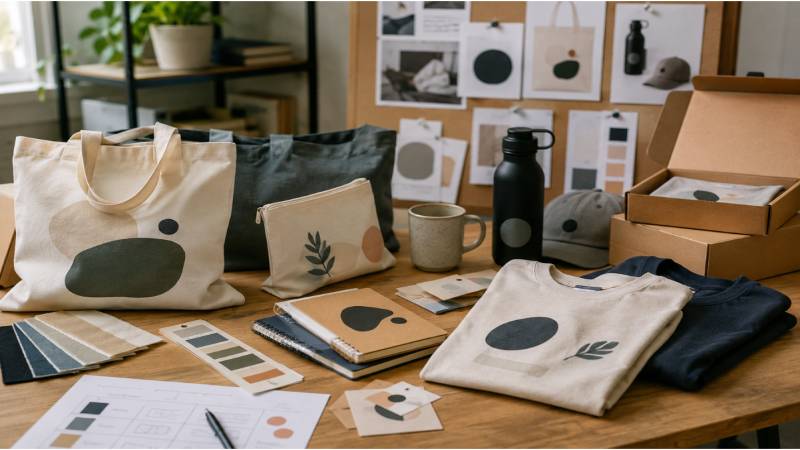
Printed merchandise can help startup brands look more established, but ordering it too quickly can lead to wasted money. Many early-stage businesses feel excited to put their logo on bags, shirts, pouches, notebooks, or event items. The idea makes sense: physical merchandise can support launches, pop-ups, trade shows, customer gifts, and team events. But if the product, design, quantity, or printing method is wrong, the result may not be useful.
Startups need to think carefully before placing an order. Printed merchandise should support a real business goal, not just exist because the brand wants something with its logo on it.
Clarify the Purpose First
Before choosing any product, a startup should ask why the merchandise is needed. Is it for a launch event? Customer packaging? Investor meetings? Employee onboarding? Local marketing? A trade show? The answer affects everything from product type to design and quantity.
For example, event giveaways should be easy to carry and broadly useful. Customer packaging should feel aligned with the product. Team merchandise can be more internal and culture-focused. A mismatch between purpose and product can make the merchandise feel random.
Many startups begin with practical options such as Custom Tote Bags because they can be used for packaging, events, and everyday visibility. Their flexibility makes them easier to justify than novelty items that only serve one moment.
Keep the First Design Simple
Startups often want merchandise to say everything at once: the logo, tagline, website, social handle, slogan, product category, and launch message. This usually makes the design weaker. A clean design is more likely to be used, especially on wearable or carryable items.
For a first order, it is usually safer to focus on a strong logo, simple placement, and a color palette that matches the brand. If the item looks too promotional, customers may not use it in public.
Subtle design can create better long-term visibility than a loud design that stays in a closet.
Understand Printing Methods Before Ordering
Different printing methods produce different results. Screen printing often works well for bold logos and solid colors, especially at larger quantities. Heat transfer may be better for detailed designs, gradients, or smaller batches, depending on the material and finish.
Startups should not choose a printing method only by price. The final result needs to match the fabric, design, and expected use. A guide such as Screen Printing vs Heat Transfer for Custom Tote Bags can help brands understand the practical differences before placing an order.
This is especially important when the startup has limited budget and cannot afford a large batch that does not meet expectations.
Order a Realistic Quantity
It can be tempting to order a large quantity to lower the unit cost. But startups should be careful. If the brand identity changes, the event turnout is smaller than expected, or the product does not get used, extra inventory becomes waste.
A smaller first order can help test demand and quality. Once the brand knows what customers respond to, future orders can be more confident.
The right quantity should match the campaign, storage space, and realistic distribution plan.
Check Product Quality, Not Just Print Quality
A sharp print cannot save a poor product. If the bag, shirt, or accessory feels flimsy, customers may not keep it. The base product should match the brand’s desired impression.
Startups should consider material, stitching, comfort, size, and durability. If possible, request a sample before ordering in bulk. A product that looks fine in a digital mockup may feel different in real life.
Plan How the Merchandise Will Be Distributed
Printed merchandise works best when it reaches the right people in the right setting. A tote bag given at a pop-up shop, a launch kit sent to early customers, or a welcome item included with a first order can feel intentional. Random distribution often has less impact.
Startups should treat merchandise as part of the customer experience, not a separate afterthought.
Conclusion
Startup brands should order printed merchandise carefully. Before buying, they need to define the purpose, simplify the design, understand printing methods, choose realistic quantities, check product quality, and plan distribution.
Good merchandise can help a young brand feel more memorable and professional. But it works best when it is useful, intentional, and connected to a clear business goal.See More