
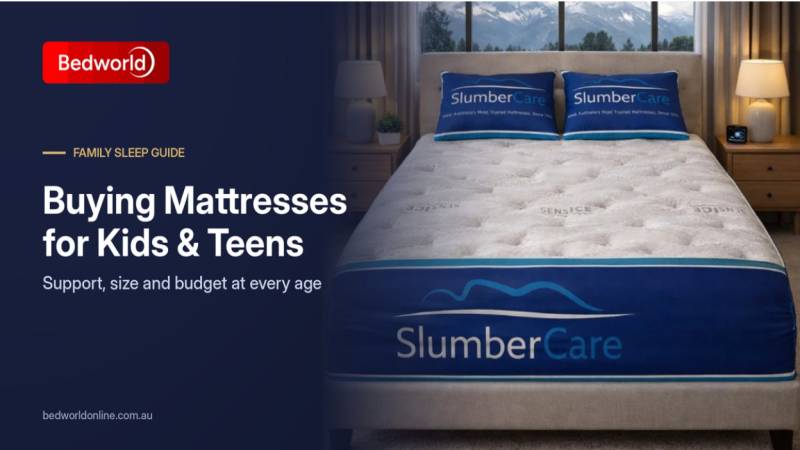
Children spend a large share of every day asleep, and their bodies are growing the whole time. Yet kids’ mattresses are often an afterthought: a hand-me-down, a cheap foam single or whatever fits the frame. Getting it right doesn’t mean spending a fortune. Whether you’re comparing budget options or looking to buy Slumbercare mattress in Perth, it’s mostly about matching support, size and durability to your child’s stage. Here’s how that changes from the first big-kid bed to the final years of high school.
This guide covers children who have moved out of a cot. For babies and cots, follow Red Nose Australia’s safe sleeping advice.
What Children Actually Need From a Mattress
Kids are lighter than adults, so a mattress that feels firm to you may feel just right to them. What matters most is even support: a surface that keeps the spine in a natural line without letting hips sink into a hollow.
Very soft, deep pillow-top mattresses are rarely the best choice for young children. They can make it harder to move around in bed and tend to develop dips under a jumping, bouncing child. A medium to medium-firm feel suits most kids, with a little more cushioning as they get heavier.
Durability matters more than luxury. A kid’s mattress has to cope with spilled drinks, the occasional accident and being used as a trampoline. A waterproof, breathable mattress protector is the single best investment you can make alongside it.
Choosing the Right Size for Each Stage
Australian mattress sizes vary by a centimetre or two between brands, but these are the standard dimensions.
| Size | Approx. dimensions | Best suited to |
|---|---|---|
| Single | 92 x 188 cm | Younger children, smaller rooms |
| King single | 107 x 203 cm | Older kids and teens, room to grow |
| Double | 138 x 188 cm | Teens with space, sleepovers |
| Queen | 153 x 203 cm | Tall older teens in larger rooms |
Ages 3 to 7: The First Big-Kid Bed
A standard single is usually plenty. Look for a mattress that’s supportive rather than plush, with a removable or easily protected cover. Low-profile beds make climbing in and out easier and soften the occasional tumble.
Ages 8 to 12: Planning Ahead
This is a good time to consider a king single. It’s the same length as a queen, so it won’t be outgrown during a teenage growth spurt, while still fitting most children’s bedrooms.
Teenagers: Adult Needs, Smaller Rooms
Many teenagers are close to adult height and weight, so they need adult-level support. Teen sleep patterns also shift later, which makes quality sleep in the hours they do get even more important. A king single or double with a medium-firm feel suits most teens well.
Mattresses for Bunk Beds and Trundles
Bunk beds add one important rule: always check the frame’s maximum mattress thickness. A mattress that’s too deep raises the sleeper above the top bunk’s guard rail and cancels out its safety purpose. Thinner, lighter mattresses also make it far easier to change sheets on a top bunk.
For trundles and sofa beds used for sleepovers, comfort matters less than fit. A slim foam mattress that slides away neatly is usually the practical choice.
Bring Your Child to the Showroom
Children are surprisingly good judges of comfort when you give them the chance. Let them lie on two or three options in the position they normally sleep in, and ask which one they’d choose. If you’re furnishing several bedrooms in one go, a visit to a mattress shop near Canning Vale or elsewhere in your area lets the whole family compare in one trip, often with a single delivery for everything. Teenagers in particular are more likely to look after a mattress they helped choose.
How Much Should You Spend?
Price should follow the age and how long the mattress needs to last:
- Young children: a well-made, mid-range single is usually plenty. The aim is support and durability, not luxury features.
- Pre-teens: worth spending a little more if you’re buying a king single they’ll keep through their teens.
- Teenagers: treat it like an adult purchase. A mattress bought at 13 may be the one they take when they move out.
Whatever you spend, budget for a protector. It costs a fraction of the mattress and can protect your warranty from spills and stains.
Frequently Asked Questions
Can my child use a hand-me-down mattress?
Only if it’s still supportive, clean and free of dips. An old adult mattress has often already lost much of its support, which a child will feel more than you’d expect.
Should a child’s mattress be firm?
Supportive rather than hard. Most children do well on a medium to medium-firm mattress that keeps their spine level without feeling like a board.
When should we move from a single to a king single?
Many families make the switch between about eight and twelve, or sooner if feet are reaching the end of the bed. Buying a king single then usually avoids another upgrade in the teenage years.
How do I protect a mattress from bedwetting?
Use a fully waterproof, breathable protector and keep a spare for quick changes. Clean any spills promptly to stop moisture reaching the inner layers.
Conclusion
The right mattress for a child isn’t the most expensive one. It’s the one that matches their size, weight and stage of growth. Start with a supportive single, plan a king single for the pre-teen years, and treat teenagers as the near-adults they are. Add a good protector, let your kids help choose, and their mattress will see them comfortably through some of the most important growing years.See More