
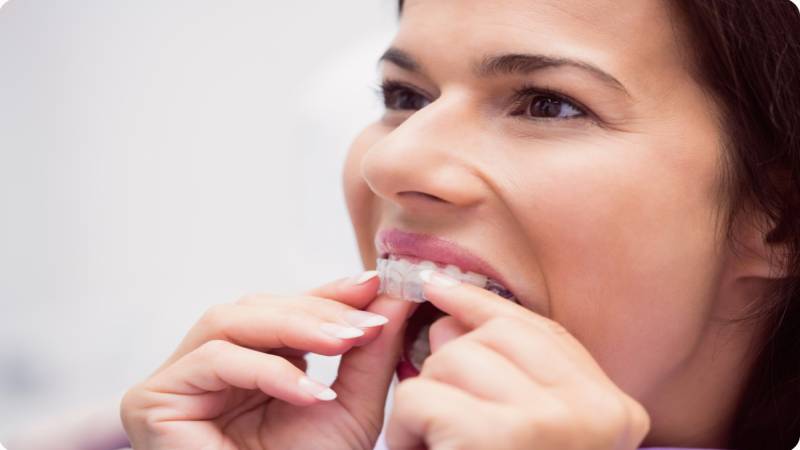
Most people associate Invisalign in Edmonton and clear aligner treatment generally with straightening crooked teeth, a purely cosmetic goal aimed at a more even, symmetrical smile. What often gets overlooked is that clear aligner technology has advanced enough to address genuine functional bite problems too, not just the appearance of tooth alignment.
The Difference Between Alignment and Bite Correction
Tooth alignment refers to how individual teeth are positioned relative to each other, including crowding, gaps, and rotation. Bite correction addresses something different: how the upper and lower teeth come together when the mouth closes, including issues like overbite, underbite, crossbite, and open bite. These bite problems aren’t just cosmetic; they can affect chewing efficiency, contribute to jaw strain, and, in some cases, lead to uneven wear on teeth over time.
Historically, significant bite issues were considered outside the scope of clear aligner treatment, requiring traditional braces or even surgical intervention. Advances in aligner technology, including attachments and more sophisticated movement planning, have expanded what clear aligners can realistically address.
How Aligners Address Functional Bite Issues
Modern clear aligner treatment can incorporate small tooth-colored attachments that provide additional grip points, allowing for more complex tooth movements than aligners alone could achieve. Combined with precise digital treatment planning that maps out the entire course of movement in advance, this allows many mild to moderate bite issues to be corrected using the same removable, discreet aligner system used for cosmetic straightening.
This doesn’t mean every bite problem is suitable for aligner treatment; more severe skeletal bite discrepancies may still require a different approach, but the range of cases now treatable with clear aligners has expanded considerably beyond what was possible in earlier generations of the technology.
Why This Distinction Matters for Patients
Patients who assume their bite issue automatically rules out clear aligners, based on outdated assumptions about what the technology can address, may be missing out on a treatment option that could work well for their specific case. A proper evaluation, rather than an assumption based on general treatment category, is the only reliable way to determine whether a particular bite concern falls within what aligner treatment can realistically correct.
Functional Benefits Beyond Appearance
Correcting a bite issue through aligner treatment often produces benefits beyond the visible smile improvement: reduced strain on jaw muscles, more even distribution of chewing forces, and in some cases, prevention of uneven tooth wear that a persistent bite misalignment would otherwise cause over time. These functional improvements are frequently just as significant to a patient’s long-term oral health as the cosmetic result.
Reconsidering What Clear Aligners Can Address
If you assumed your bite concern was too complex or too functional for clear aligner treatment, it’s worth revisiting that assumption with a current evaluation. Aligner technology has evolved considerably, and the range of cases it can address today, both cosmetic and functional, is broader than many patients realize.See More