
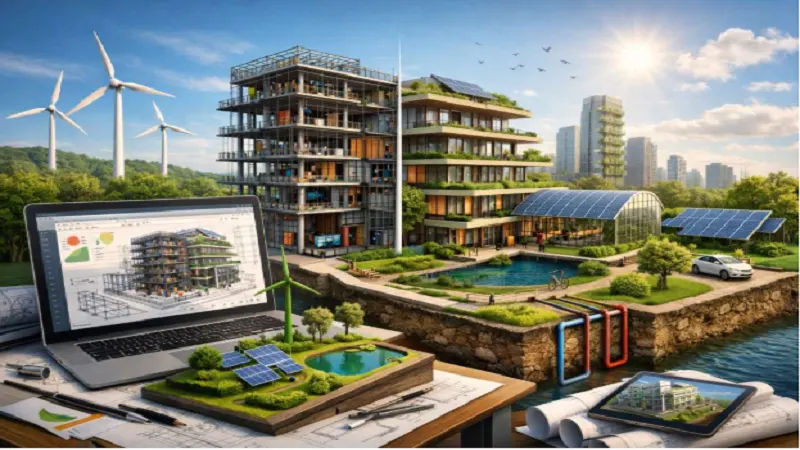
Sustainability is no longer a “value add” in architecture, it is a requirement.
Across the UK and globally, developers, architects, and engineering firms are under growing pressure to reduce carbon emissions, optimize energy performance, and comply with stricter environmental regulations. From net-zero housing projects in London to green commercial spaces across Europe, the built environment is undergoing rapid transformation.
But sustainable design is complex. It demands accurate planning, predictive simulations, efficient material usage, and seamless collaboration.
This is where Architectural BIM Modeling Services are reshaping the future of sustainable construction. By integrating intelligent digital modeling with lifecycle analysis and performance simulations, BIM is enabling smarter, greener, and more cost-efficient buildings.
Let’s explore how.
Why Is Sustainable Design a Priority in the UK and Globally?
The built environment accounts for nearly 40% of global carbon emissions, according to the United Nations Environment Programme (UNEP). Governments and private sectors alike are setting ambitious targets to reduce this footprint.
In the UK, sustainability goals align with legally binding net-zero commitments. Organisations such as the UK Green Building Council (UKGBC) actively promote low-carbon construction and energy-efficient building practices.
This shift requires more than eco-friendly materials; it requires data-driven design decisions.
That’s where Architectural BIM Modeling Services provide measurable value.
What Are Architectural BIM Modeling Services?
Building Information Modeling (BIM) is far more than 3D visualization. It creates an intelligent, data-rich digital representation of a building’s physical and functional characteristics.
Professional Architectural BIM Modeling Services combine:
- Parametric modeling
- Energy analysis integration
- Material quantity estimation
- Clash detection
- Lifecycle performance data
When paired with advanced 3D CAD Modeling Services, BIM allows stakeholders to simulate environmental impact long before construction begins.
How Does BIM Improve Energy Efficiency?
One of the strongest sustainability advantages of BIM is predictive energy analysis.
Through integrated 3D Modeling Design Services, design teams can evaluate:
- Solar exposure
- Thermal performance
- HVAC efficiency
- Natural lighting optimization
- Insulation impact
By modeling these elements digitally, architects can adjust designs to reduce long-term energy consumption.
This proactive approach supports compliance with UK building regulations and sustainability certifications.
Can BIM Reduce Material Waste?
Yes significantly.
Traditional drafting often leads to over-ordering materials due to inaccurate estimates. BIM-based CAD Modeling Services generate precise material take-offs directly from the digital model.
Benefits include:
- Accurate quantity calculations
- Reduced excess inventory
- Lower landfill contributions
- Improved procurement planning
According to reports from the World Green Building Council, reducing material waste is one of the most effective strategies for lowering embodied carbon in construction.
With BIM, waste reduction begins at the design stage.
How Do 2D & 3D Modeling Services Enhance Sustainable Collaboration?
Sustainability requires interdisciplinary coordination.
Architects, structural engineers, MEP specialists, and contractors must work together seamlessly. Fragmented communication often results in costly redesigns and inefficiencies.
Integrated 2D & 3D Modeling Services ensure:
- Consistent documentation
- Real-time design updates
- Automated clash detection
- Reduced site conflicts
Cloud-based 3D CAD Modeling and Design Services allow global teams to collaborate on a shared digital platform, minimizing errors that increase material waste and carbon output.
How Does BIM Support Lifecycle Sustainability?
Sustainable design goes beyond construction. It includes a building’s operational lifespan.
Architectural BIM Modeling Services enable lifecycle management by embedding data related to:
- Maintenance schedules
- Equipment performance
- Energy usage projections
- Replacement timelines
This long-term visibility helps facility managers maintain efficiency and extend asset life cycles.
The result? Lower operational emissions and improved cost control.
What Role Does 3D Product Modeling Services Play?
Sustainability extends beyond the building structure to its components.
Fixtures, furniture, façade systems, and interior elements can also be optimized using 3D Product Modeling Services.
These services support:
- Accurate product integration into BIM models
- Efficient prefabrication planning
- Modular construction workflows
- Reduced manufacturing waste
By integrating product-level modeling into the architectural framework, firms enhance overall sustainability performance.
Why Are UK Firms Accelerating BIM Adoption?
The UK has long been a leader in digital construction standards.
Government-backed digital mandates and industry frameworks have accelerated BIM implementation in both public and private projects.
Organizations aligning with the UK BIM Framework are improving:
- Data transparency
- Regulatory compliance
- Project efficiency
- Environmental accountability
As sustainability targets tighten, reliance on advanced CAD Modeling Services is expected to increase further.
How Does BIM Enable Sustainable Innovation?
Innovation thrives when data informs creativity.
With Custom 3D Modeling Services, architects can experiment with:
- Alternative facade systems
- Lightweight structural solutions
- Recycled materials
- Renewable energy integrations
These simulations allow design experimentation without increasing real-world waste.
AI-assisted generative design tools increasingly integrated into 3D CAD Modeling Services also suggest optimized structures that minimize material use while maintaining strength.
What Challenges Do Firms Face When Implementing BIM for Sustainability?
Despite its benefits, BIM adoption can present challenges:
- Upfront training costs
- Software integration complexity
- Data management security
- Resistance to workflow change
However, long-term gains typically outweigh initial hurdles.
Firms that delay digital transformation may struggle to meet future environmental compliance standards.
How Are Startups and SMEs Benefiting from BIM?
Sustainability is not limited to large corporations.
Startups developing eco-friendly housing solutions or modular construction systems increasingly rely on Architectural BIM Modeling Services to validate concepts.
Partnering with an experienced 3D Modeling Company allows smaller firms to access advanced 3D Modeling Design Services without heavy capital investment.
This approach improves investor confidence while reducing design risks.
What Trends Will Shape Sustainable BIM in 2026?
Several emerging trends are influencing sustainable BIM adoption:
1. Digital Twin Integration
Real-time performance data linked to BIM models.
2. Carbon Footprint Analysis
Embedded tools calculating embodied carbon.
3. AI-Driven Material Optimization
Automated efficiency recommendations.
4. Modular & Prefabrication Modeling
Reducing on-site waste and emissions.
5. Cloud-Based Global Collaboration
Improving cross-border sustainable development.
As digital ecosystems mature, BIM will continue evolving from a design tool into a sustainability management system.
Why Is BIM Essential for Net-Zero Goals?
Net-zero commitments demand measurable progress.
Architectural BIM Modeling Services provide the data transparency required to:
- Track energy efficiency
- Quantify material use
- Monitor lifecycle emissions
- Support certification processes
Without accurate modeling, sustainability claims lack measurable backing.
Digital validation makes green design credible.
Final Thoughts
BIM as the Foundation of Sustainable Architecture
Sustainable architecture is no longer aspirational, it is operational.
Architectural BIM Modeling Services enable architects, engineers, and business leaders to:
- Reduce environmental impact
- Improve material efficiency
- Enhance interdisciplinary collaboration
- Meet regulatory standards
- Support long-term operational sustainability
When combined with advanced 3D Product Modeling Services and intelligent 3D CAD Modeling and Design Services, BIM becomes the digital backbone of responsible construction.
Across the UK and global markets, forward-thinking organisations are quietly partnering with experienced CAD specialists who combine sustainability expertise with advanced modeling workflows ensuring projects are not only structurally sound but environmentally responsible.
In the era of climate accountability, sustainable design begins with intelligent modeling.
And BIM is leading the way.
FAQs:
1. What are Architectural BIM Modeling Services?
Architectural BIM Modeling Services create intelligent 3D digital building models that include data on materials, systems, performance, and lifecycle management to improve design accuracy and sustainability.
2. How do Architectural BIM Modeling Services support sustainable design?
They enable energy analysis, material optimization, clash detection, and lifecycle simulations helping reduce waste, lower carbon emissions, and improve building efficiency.
3. Why are UK firms adopting BIM for sustainable construction?
UK firms use BIM to meet net-zero targets, comply with digital building frameworks, improve regulatory documentation, and reduce environmental impact.
4. How do 3D Product Modeling Services contribute to sustainable architecture?
3D Product Modeling Services allow accurate integration of prefabricated components, fixtures, and materials into BIM models, reducing manufacturing waste and improving efficiency.
5. Are 2D drawings still used with BIM modeling?
Yes. Integrated 2D & 3D Modeling Services generate precise technical drawings directly from the BIM model for compliance and construction documentation.
6. How do CAD Modeling Services reduce material waste?
CAD Modeling Services provide precise quantity take-offs and clash detection, preventing over-ordering, design conflicts, and unnecessary material disposal.
7. What is the difference between 3D CAD Modeling Services and BIM?
3D CAD Modeling Services focus on geometric design, while BIM incorporates additional data layers such as material properties, cost, scheduling, and lifecycle information.
8. Can small firms benefit from Architectural BIM Modeling Services?
Yes. Startups and SMEs can partner with a professional 3D Modeling Company to access advanced 3D CAD Modeling and Design Services without large in-house investments.
9. How does BIM help achieve net-zero construction goals?
BIM supports energy performance simulation, carbon footprint tracking, efficient material planning, and long-term operational monitoring to reduce overall emissions.
10. What trends will shape BIM and sustainable design in 2026?
Key trends include digital twin integration, AI-driven material optimization, cloud collaboration, modular construction modeling, and real-time lifecycle performance tracking. See More