
If you’ve ever Googled ‘mole mapping’ and come out more confused than when you started, you’re not alone. The term gets thrown around a lot in skin clinics, but most people have only a vague idea of what it actually involves.
Here’s a plain-language guide to what mole mapping is, who really needs it, and whether it’s worth your time and money.
So, What Is Mole Mapping?
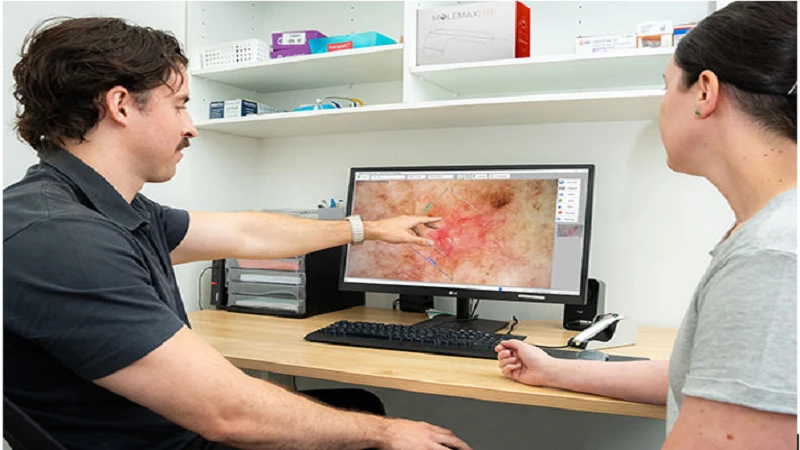
Mole mapping is exactly what it sounds like. A trained clinician takes a detailed photographic record of your skin, usually your entire body capturing every mole, lesion, and pigmented spot. The images are stored digitally and used as a baseline.
When you return for your next appointment (typically 6 to 12 months later), the new photos are compared against the old ones using specialised software. The doctor is looking for any changes in size, shape, colour, or texture that weren’t there before.
This approach is based on a simple but powerful insight: most moles that are dangerous don’t look alarming from the start. They change over time. And a visual comparison is often the most reliable way to catch that change early.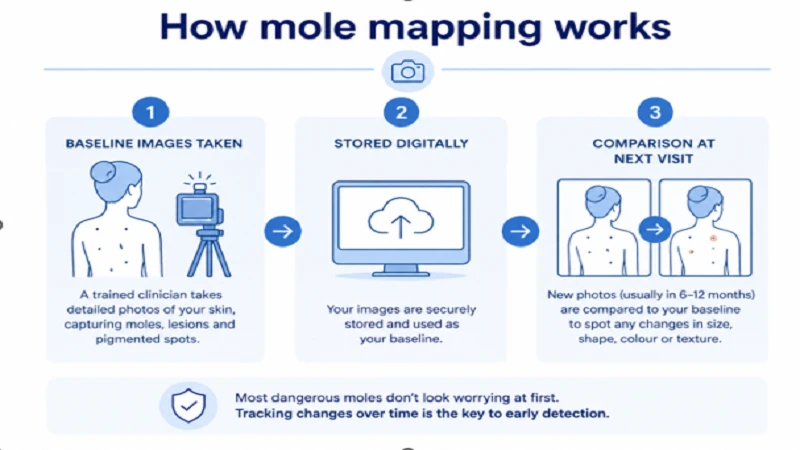
How Is It Different From a Regular Skin Check?
A standard skin check is a visual inspection. Your doctor looks at each mole with their eyes, maybe assisted by a dermatoscope, which is a handheld magnifying tool and makes a judgement call based on what they see at that moment.
Mole mapping adds a layer of time. Instead of just looking at what a mole looks like today, it gives the doctor a way to compare it against what it looked like last year. That’s valuable because change is often more informative than appearance alone.
Think of it this way: a photograph of a mole that looks a little unusual might not tell you much on its own. But if you compare it to a photo from 12 months ago and see that it’s grown, changed colour, or developed an irregular edge that’s significant.
Who Is Mole Mapping Most Useful For?
It’s not for everyone, and that’s worth being honest about. For someone in their 30s with olive skin, no family history of melanoma, and only a handful of moles, a standard annual skin check is likely sufficient.
But for certain groups, mole mapping is genuinely valuable:
- People with many moles (generally 50 or more)
- Anyone with a personal or family history of melanoma
- People who have already had a mole removed that came back with unusual cells
- Those with fair skin who have had significant lifetime sun exposure
- Patients who have had organ transplants or are on immunosuppressant medications
For these groups, the standard skin check while still important doesn’t provide the same level of ongoing monitoring that mole mapping does.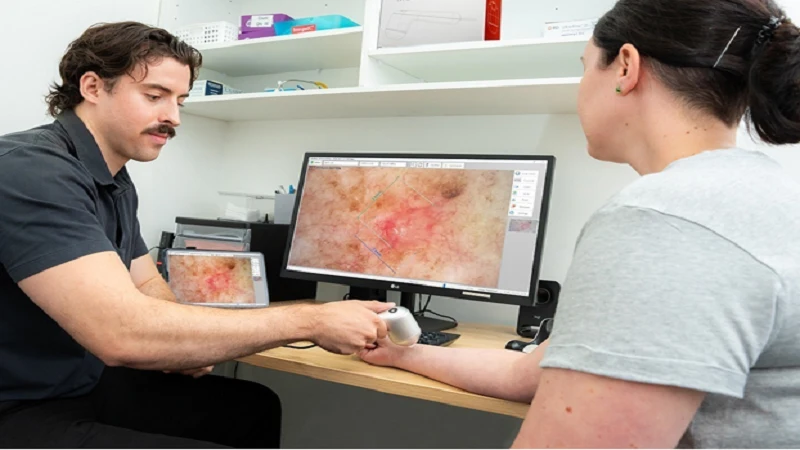
What Does Technology Actually Look Like?
Modern mole mapping uses medical-grade digital imaging equipment. The camera systems used in clinics are specifically designed for dermoscopy; they capture high-resolution images under controlled lighting that make it possible to see details that would be invisible to the naked eye.
A good example of what’s being used in clinics today is the MoleMax Lite mole mapping device a plug-and-play system that delivers real-time 2K live imaging, making it accessible for clinics of all sizes without requiring a complex setup. The images captured are stored in secure patient management software that makes comparison across visits straightforward.
Some clinics also offer total body photography, a standardised set of photos taken from fixed angles that capture your whole body surface. This is often used alongside close-up mole imaging for people with higher risk profiles.
Is Mole Mapping Covered by Medicare in Australia?
This is one of the most common questions. The short answer is: not directly. Medicare does cover consultations with GPs and dermatologists for skin checks, but the mole mapping component of the imaging technology and software is generally an out-of-pocket expense.
Costs vary between clinics. A full mole mapping session can range from around $100 to $350 depending on where you go and what’s included. Some clinics offer package rates for ongoing monitoring.
For people at high risk, many find the cost a worthwhile investment, particularly when weighed against the cost financially and emotionally of a delayed melanoma diagnosis.
Can You Rely on Apps to Track Your Own Moles?
Smartphone apps for mole tracking have become popular, and while some of them are reasonable as a supplementary tool, they are not a substitute for professional imaging. Consumer cameras don’t capture the subsurface detail that medical-grade equipment does, and the AI analysis in most consumer apps hasn’t reached the accuracy needed for clinical decision-making.
Use apps to notice changes and flag them for a professional to look at but don’t rely on them as your primary screening tool.
How to Find a Clinic That Offers Mole Mapping
Not every skin clinic offers mole mapping. When searching for one, look for clinics that specifically advertise digital dermatoscopy or skin imaging, rather than just ‘skin checks’. You can also ask your GP for a referral to a dermatologist who specialises in pigmented lesion clinics.
Before your appointment, it’s worth calling ahead to ask what imaging technology they use, how images are stored, and how long your records are kept. A reputable clinic should be transparent about all of this.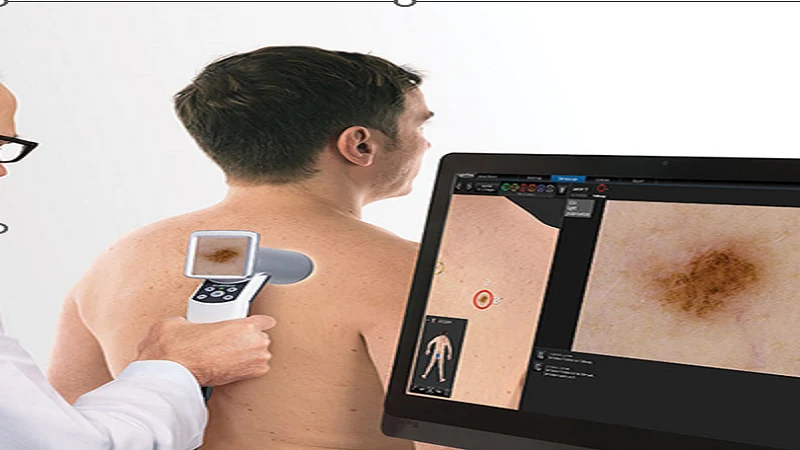
Mole mapping won’t tell you whether you have cancer. What it does is give your doctor the best possible chance of spotting something that’s changing before it becomes harder to treat.
For the right patients, it’s a genuinely valuable addition to routine skin care. If you’re in a higher-risk group, it’s worth asking about at your next appointment.See More